



Opioid Receptor
Opioid receptors are a group of G protein-coupled receptors with opioids as ligands. The endogenous opioids are dynorphins, enkephalins, endorphins, endomorphins and nociceptin. Opioid receptors are distributed widely in the brain, and are found in the spinal cord and digestive tract. Opioid receptors are molecules, or sites, within the body that are activated by opioid substances. Opioid receptors inhibit the transmission of impulse in excitatory pathways within the human body system. These pathways include the serotonin, catecholamine, and substance P pathways, which are all implicated in pain perception and feelings of well-being. Opioid receptors are further subclassified into mu, delta, and kappa receptors. All the classes, while exhibiting differing modes of action, share some basic similarities. They all are driven by the potassium pump mechanism, which is found on the plasma membrane of the majority of cells.
Opioid Receptor Isoform Specific Products
All Product Categories
-
Opioid Receptor Inhibitors
(23)
View all products
-
Opioid Receptor Agonists
(298)
View all products
-
Opioid Receptor Antagonists
(130)
View all products
-
Opioid Receptor Activators
(33)
View all products
-
Opioid Receptor Modulators
(28)
View all products
-
Opioid Receptor Controls
(7)
View all products
-
Opioid Receptor Ligands
(9)
View all products
-
Opioid Receptor Related Products (614)
Related Products (614)

-
Antibodies (3)
-
Opioid Receptor Isoform Comparison
-
Naloxonazine dihydrochloride
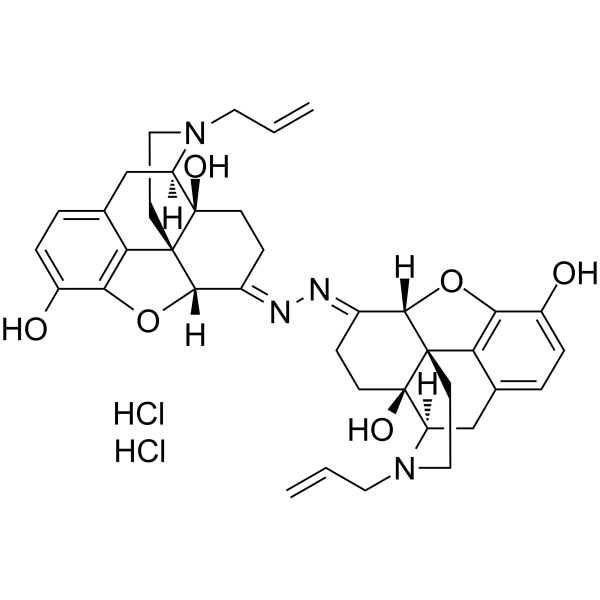 0 ImagesNaloxonazine dihydrochloride is a specific μ-opioid receptor antagonist with an IC50 of 5.4 nM. Naloxonazine dihydrochloride also shows anti-leishmanial activity.
-
KNT-127
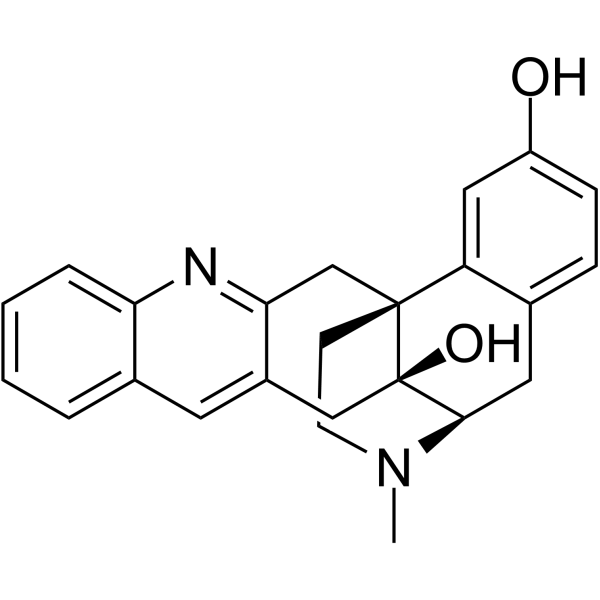 0 ImagesKNT-127 is a selective and BBB-penetrant δ-opioid receptor (DOR) agonist (Ki = 0.16 nM). KNT-127 is highly selective to the δ receptor, with Ki values of 0.16, 21.3 and 153 nM for δ, μ and κ receptors, respectively. KNT-127 acts as a biased ligand that mainly activates cyclic adenosine monophosphate (cAMP) signaling with lower beta-arrestin signaling activation. KNT-127 increases the release of dopamine and L-glutamate in the striatum, nucleus accumbens, and prefrontal cortex. KNT-127 exhibits antidepressant- and anxiolytic-like effects. KNT-127 can be studied in research on neurological diseases.
-
Corydine
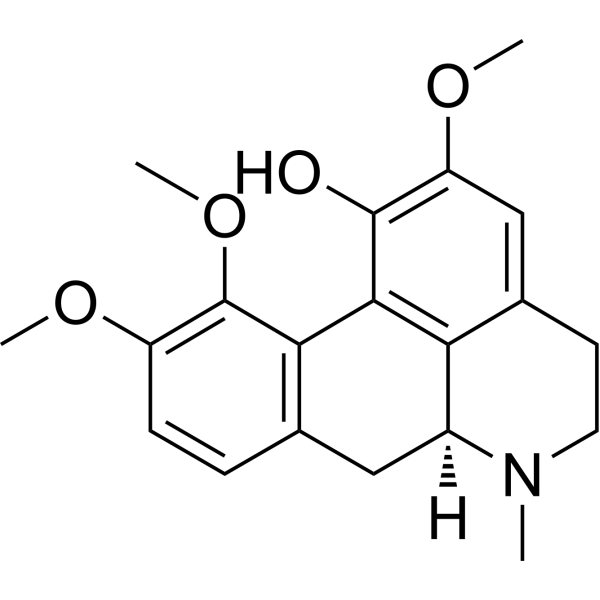 0 ImagesCorydine is a HIV-1 reverse transcriptase inhibitor and μ-opioid receptor (MOR) agonist, with an IC50 of 356.7 μg/mL against HIV-1 reverse transcriptase, an EC50 of 0.51 μM for MOR, and a Ki of 2.82 μM for MOR. Corydine produces antinociceptive effects by inhibiting acetic acid-induced writhing behavior in a MOR-dependent manner. Corydine inhibits the proliferation of cancer cells, mitogen-stimulated lymphocytes and IL-2-dependent cells. Corydine can be used in studies related to human immunodeficiency virus infection, visceral pain, leukemia, melanoma, bladder cancer and colon adenocarcinoma.
-
Bevenopran
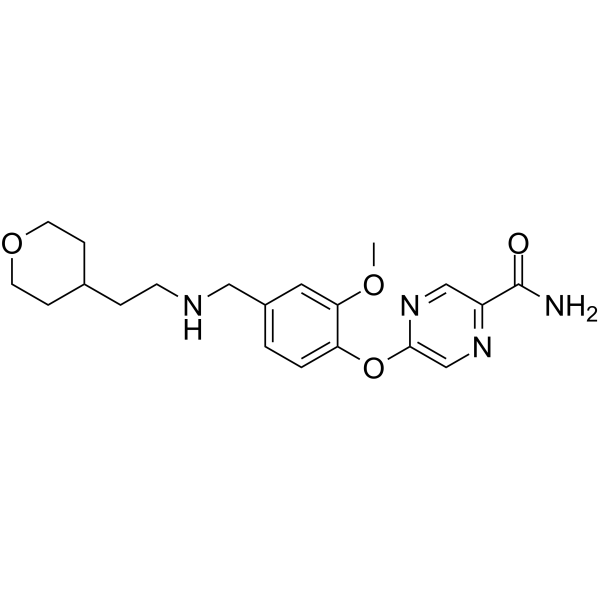 0 ImagesSynonyms: CB-5945; ADL-5945Bevenopran is a peripheral μ-opioid receptor antagonist.
-
ICI-204448
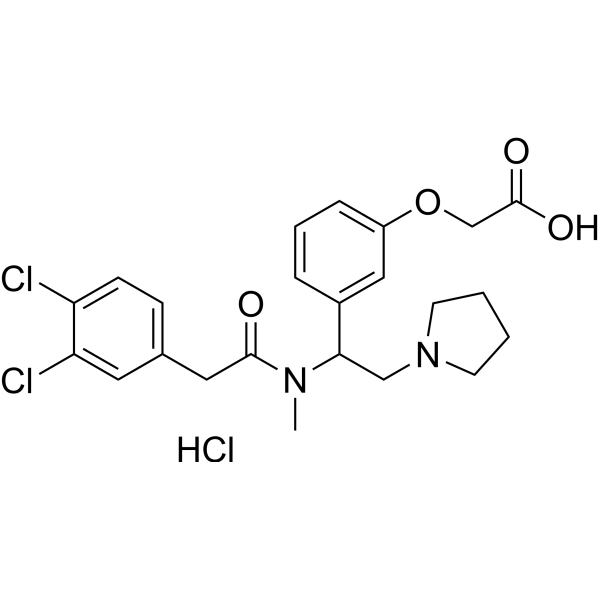 0 ImagesICI-204448 is a κ-opioid agonist with limited access to the CNS, ICI-204448 can displace the binding of the kappa-opioid ligand 3H-bremazocine from guinea pig cerebellum membranes.

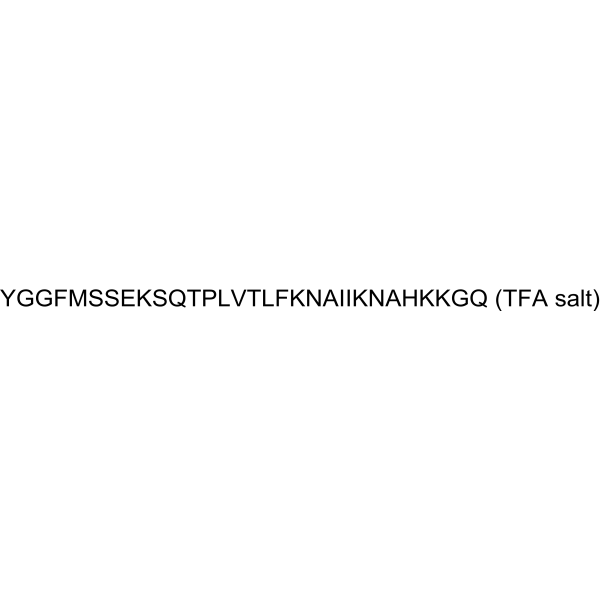
-
Gluten Exorphin B5
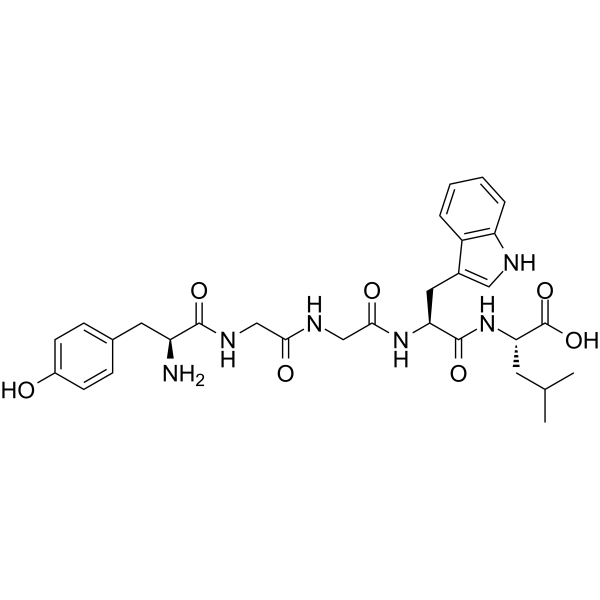 0 ImagesGluten Exorphin B5 is an exogenous opioid peptides derived from wheat gluten, acts on opioid receptor, increases postprandial plasma insulin level in rats.
-
Noribogaine hydrochloride
 0 ImagesNoribogaine hydrochloride is an orally active, blood-brain barrier permeable SERT inhibitor (IC50=50-300 nM) and hERG channel blocker. Noribogaine hydrochloride enhances serotonergic transmission, activates the κ-opioid receptor (OPRK) G protein signaling pathway and inhibits β-arrestin recruitment. Meanwhile, Noribogaine hydrochloride blocks the μ-opioid receptor (OPRM) signaling pathway as well as ion channels associated with cardiac repolarization. Noribogaine hydrochloride induces neuritogenesis, upregulates GDNF mRNA expression, and modulates opioid tolerance. Noribogaine hydrochloride reduces alcohol-seeking behavior in experimental animals, and is widely used in studies related to depression, addiction, alcoholism, and cardiotoxicity.
-
GR 89696
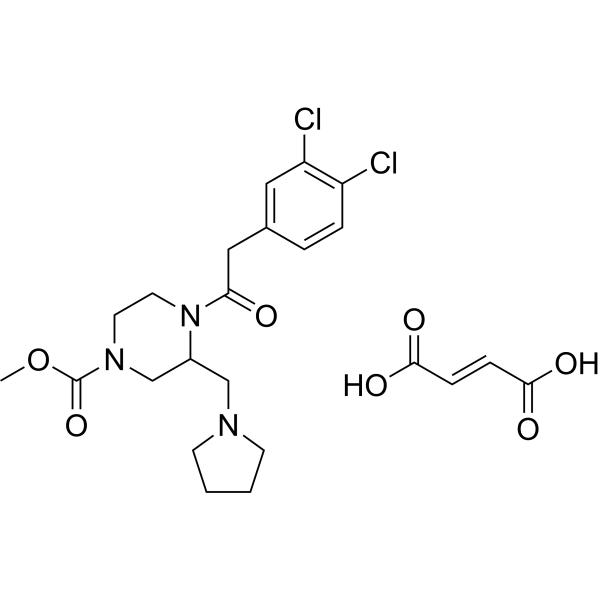 0 ImagesGR 89696 is a highly selective κ2 opioid receptor agonist with potential to prevent pruritus.
-
Iprindole
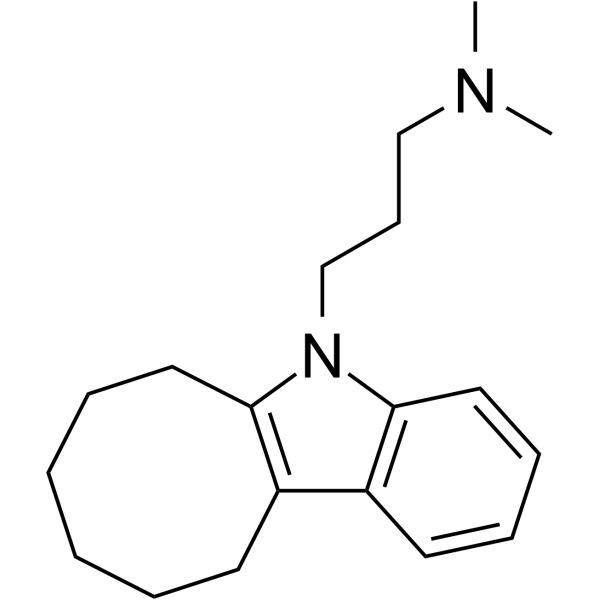 0 ImagesIprindole, an opioid receptor agonist, is a tricyclic antidepressant. Iprindole shortens the immobility time in mice forced swimming test, which can be reversed by the opiate antagonist Naloxone (HY-17417A). Iprindole induces lamellar body formation but devoid of lamellar bodies. Iprindole can be used for the research of depression.
-
Harmane hydrochloride
 0 ImagesHarmane hydrochloride is a benzodiazepine receptor inhibitor (IC50=7 μM), with IC50 values for mACh, Opioid Receptor, MAO-A/B, and α2-adrenergic receptor of 24 μM, 2.8 μM, 0.5 μM, 5 μM, and 18 μM, respectively. Harmane hydrochloride inhibits the I1 imidazoline receptor (IC50 = 30 nM) to reduce blood pressure and has antidepressant, anti-anxiety, anticonvulsant, and analgesic effects. Harmane hydrochloride inhibits dopamine biosynthesis by decreasing tyrosine hydroxylase (TH) activity and enhancing L-DOPA-induced cytotoxicity in PC12 cells. Additionally, Harmane hydrochloride can increase the mutagenic effect induced by 2-acetylaminofluorene (AAF).
-
Salvinorin A
 0 ImagesSynonyms: Divinorin ASalvinorin A is a potent, unique and short-acting high efficacy kappa-opioid receptor (KOPr) agonist with Ki value of 4.3 nm. Salvinorin A is a non-nitrogenous neoclerodane isolated from Salvia divinorum.
-
N-terminally acetylated Leu-enkephalin
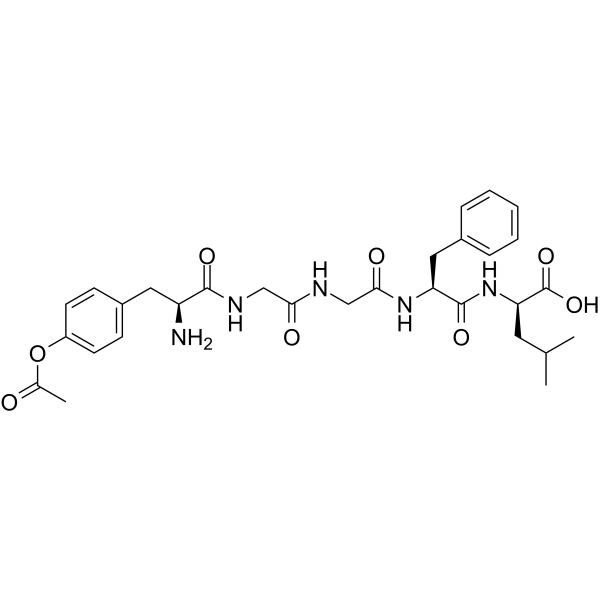 0 ImagesSynonyms: Ac-L-Tyr-Gly-Gly-L-Phe-D-Leu-COOHN-terminally acetylated Leu-enkephalin is the N-terminally acetylated form of Leu-enkephalin. Leu-enkephalin is a five amino acid endogenous peptide that acts as an agonist at opioid receptors.
-
LY2940094 tartrate
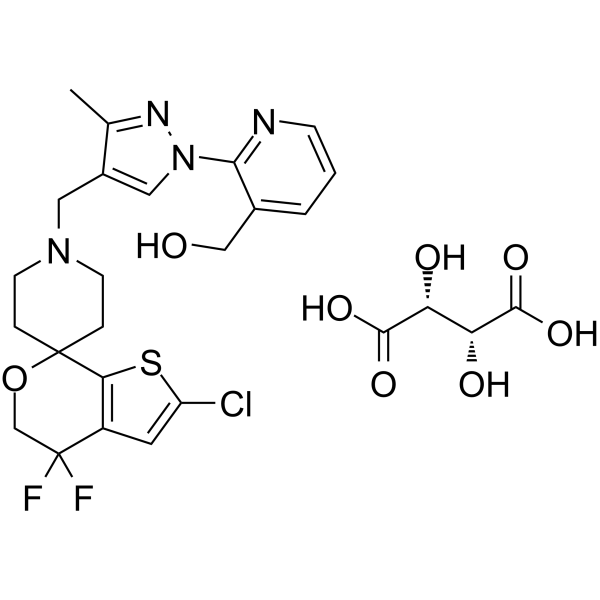 0 ImagesSynonyms: BTRX-246040 tartrateLY2940094 (BTRX-246040) tartrate is a potent, brain penetrant, selective and orally available N/OFQ peptide (NOP) receptor antagonist with high affinity (Ki=0.105 nM) and antagonist potency (Kb=0.166 nM). LY2940094 tartrate reduces Ethanol self-administration and Ethanol seeking in animal models.
-
LY2795050
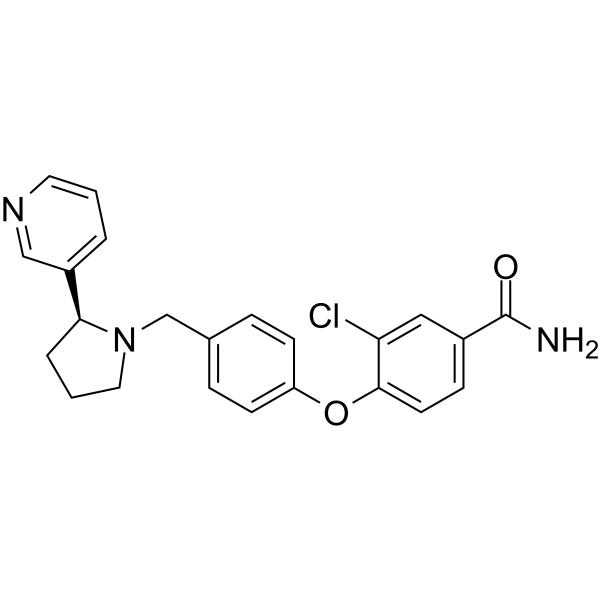 0 ImagesLY2795050 is a short-acting selective κ(kappa)-opioid receptor (KOR) antagonist. LY2795050 has high affinity for the KOR with Ki value of 0.72 nM. LY2795050 can be used for the research of central nervous system dysfunction.
-
PAD-PF2
 0 ImagesCat. No.: HY-176710Purity: 99.94%PAD-PF2 is a PAD family inhibitor, as well as a κ-opioid receptor agonist (EC50 = 7.55 μM) and an M1 muscarinic acetylcholine receptor antagonist (IC50 = 12.3 μM). The IC50 values of PAD-PF2 against PAD1, PAD2, PAD3 and PAD4 are 109 nM, 27.9 nM, 106 nM and 20.1 nM, respectively. PAD-PF2 binds to the common allosteric pocket of PAD1-4, and its inhibitory effects on PAD2 and PAD4 are Ca2+-dependent. PAD-PF2 inhibits protein citrullination in neutrophils. PAD-PF2 is applicable to research related to rheumatoid arthritis, neurodegenerative diseases and cancer.
-
BPR1M97
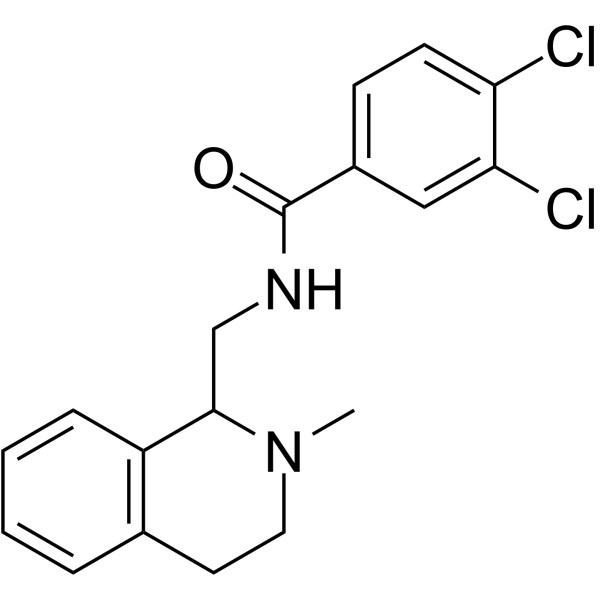 0 ImagesBPR1M97 is a dual-acting mu opioid receptor (MOP) and nociceptin-orphanin FQ peptide (NOP) receptor agonist with Ki values of 1.8 and 4.2 nM, respectively. BPR1M97 shows high potency and blood-brain barrier penetration, and produces potent antinociceptive effects.
-
BMS-986121
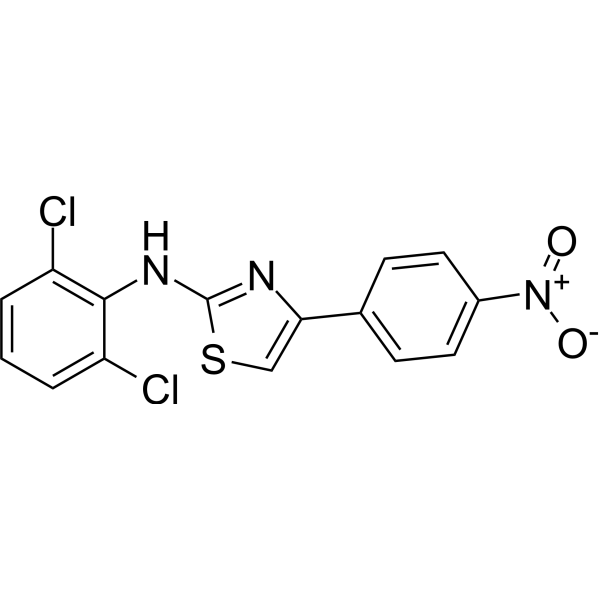 0 ImagesBMS-986121 is a positive allosteric modulator (PAM) of the μ opioid receptor extracted from patent WO2014107344. BMS-986121 is built on a chemical scaffold representing a new chemotype for μ receptor PAMs.
-
BRL 52537 hydrochloride
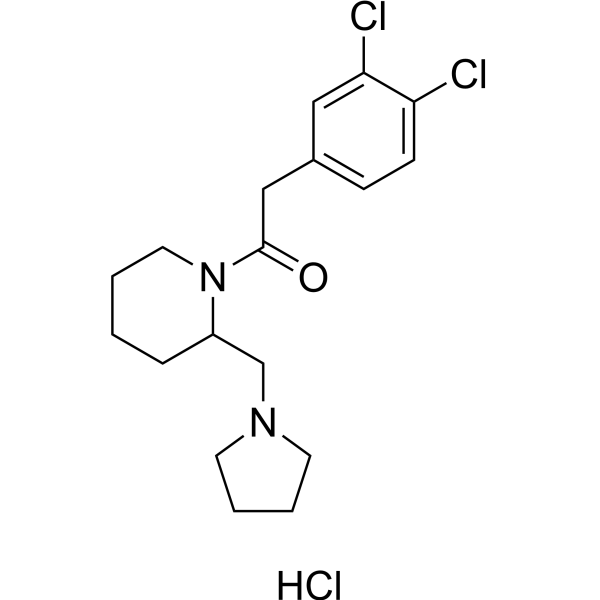 0 ImagesBRL 52537 hydrochloride is a highly selective κ-Opioid receptor (KOR) agonist with Kis of 0.24 nM and 1560 nM for κ and μ subtypes, respectively. BRL 52537 hydrochloride decreases ischemia-evoked NO production as a potential mechanism of neuroprotection. BRL 52537 hydrochloride attenuates early stroke damage.




